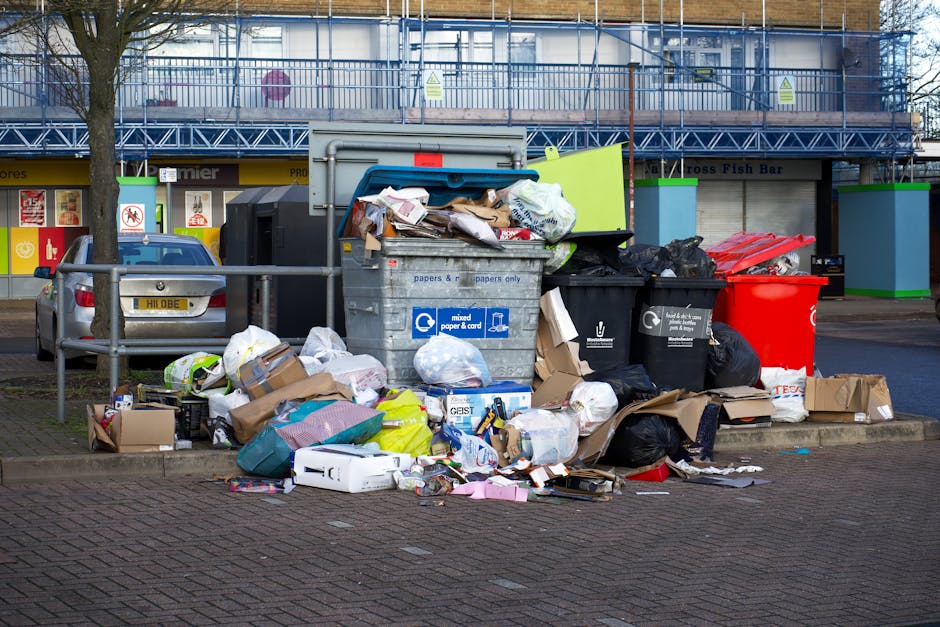
Insider tips for secure office rubbish removal West Ham

If you are sorting out office rubbish in West Ham, the "secure" part matters just as much as the "removal" part. Old filing cabinets, cable boxes, broken chairs, IT clutter, and a few mystery bags from the back store can all hide paper records, device data, or items you simply do not want wandering off to the wrong place. In busy offices, that risk is easy to underestimate until the day the clear-out starts and suddenly everyone is asking where the shredding pile went.
This guide pulls together practical insider tips for secure office rubbish removal West Ham, with a focus on planning, privacy, compliance, and the small decisions that make a big difference. You will learn how secure office clearance works, what to prepare before collection, how to avoid common mistakes, and how to judge whether a removal option is actually safe for your workplace. Nothing flashy. Just the stuff that helps.
Why secure office rubbish removal matters
Office rubbish is not always just rubbish. That is the simple truth. In a working office, waste can include printed invoices, staff records, outdated laptops, client folders, packaging with delivery details, access cards, or even badges tucked into desk drawers. If these items are thrown out carelessly, the risk is not only clutter - it is identity leakage, reputational damage, and a messy audit trail.
In West Ham, where offices often sit close to shared buildings, loading bays, and busy streets, security can break down at the point of collection as much as at the point of disposal. A bag left by reception for too long, an unlabeled box in a corridor, or a skip placed where anyone can rummage through it... that is where problems start. To be fair, most teams do not mean to be careless. They are just busy.
Secure rubbish removal matters because it helps you control:
- Confidentiality - paper files, labels, and client information stay protected.
- Asset security - old hardware and office equipment are handled properly.
- Health and safety - clear walkways, less trip risk, and fewer storage hazards.
- Operational continuity - clear-outs happen without disrupting the workday too badly.
- Compliance and trust - your team can show a sensible process if asked.
There is also a quieter benefit: peace of mind. When disposal is handled well, people stop worrying about "did that folder go in the wrong bin?" and get back to work. That calm is worth a lot in a busy office.
How secure office rubbish removal West Ham works
At a practical level, secure office rubbish removal is a controlled process for collecting, sorting, moving, and disposing of office waste in a way that reduces risk. It usually begins with a survey or a quick assessment, then the team separates general waste from items that need special handling, such as paper records, electronics, furniture, or anything potentially confidential.
The secure part is all in the details. For example, sensitive items should be boxed or bagged in a way that keeps them traceable until collection. Electronics may need to be separated from general waste so they can be reused, recycled, or processed properly. Large items often need route planning, especially in West Ham where access can be tight and timing matters. No one wants a removal crew blocking a loading bay at the wrong moment. Everyone's day goes a bit sideways.
A secure clearance typically follows this flow:
- Initial review - identify what is being removed and what needs special handling.
- Segregation - keep confidential items, e-waste, furniture, and general rubbish apart.
- Collection planning - confirm access, timings, lift usage, parking, and floor routes.
- Removal - items are taken away with minimal exposure and disruption.
- Sorting and disposal - waste is directed to the correct destination, whether reuse, recycling, or disposal.
- Close-out - paperwork, receipts, or service confirmation are kept for records.
Where office clearances are more sensitive, businesses often ask for extra controls such as sealed containers, supervised loading, or documented handling for confidential waste. The exact process varies, but the aim stays the same: stop valuable or sensitive material from getting loose.
Key benefits and practical advantages
Security is the headline, but there are several other advantages hidden in a well-run office clearance. Some are obvious, some only become obvious after you have had a stressful clear-out once and promised yourself never again.
- Less data exposure: old letters, files, and printed notes are less likely to be mishandled.
- Cleaner handover between teams: if you are moving out, refurbishing, or downsizing, secure removal keeps the process tidy.
- Faster office resets: fewer loose items mean easier reorganisation of desks, stockrooms, and storage areas.
- Better recycling outcomes: when items are sorted correctly, more material can be reused or recycled.
- Reduced workplace stress: staff spend less time worrying about clutter, dust, and sensitive files.
There is also a commercial angle. A clean, well-managed office sends a stronger signal to visitors, clients, and landlords. You do not need a glossy showroom; just a workplace that looks looked after. That counts.
Expert summary: secure office rubbish removal is not only about taking things away. It is about controlling access, reducing mistakes, keeping records tidy, and making the office easier to run the next day. The best results usually come from planning before the van arrives, not after.
Who this is for and when it makes sense
This service is useful for a wide range of workplaces in West Ham, from small offices to multi-room operations. If you are thinking, "We are not exactly a large corporation, do we really need all this?" the answer is often yes, even for a small team. One filing cabinet can hold enough sensitive information to make a careless disposal a real headache.
It tends to make sense for:
- Offices relocating or downsizing
- Businesses clearing out storage rooms or archive spaces
- Teams replacing desks, chairs, or workstations
- Offices disposing of old IT equipment
- Landlords and managing agents preparing a unit for the next occupier
- Companies that want a more structured way to handle waste regularly
It can also be the right move after a rebrand, a fit-out, or a housekeeping push. You know that moment when the office starts to feel a little heavy, visually and mentally? Papers pile up, the old printer is still sitting in the corner, and nobody quite remembers who owns the broken monitor. That is a good sign it is time.
If your office handles client records, financial paperwork, staff data, or devices that store information, secure rubbish removal is less optional and more basic good practice. Nothing dramatic. Just sensible.
Step-by-step guidance
Here is a straightforward way to organise secure office rubbish removal without turning it into a week-long project. Keep it practical. Keep it calm.
1. Walk the space before you book anything
Do a quick room-by-room review. Check desk drawers, storage cupboards, print areas, comms rooms, archive shelves, and any forgotten corners. Offices are full of "temporary" piles that somehow become permanent. If you have ever opened a cabinet and found cables from three obsolete printers, you will know exactly what I mean.
2. Separate the waste into clear groups
Group items by type: confidential paper, general office rubbish, furniture, electrical items, and anything bulky or awkward. This makes the job cleaner and reduces the chance of something sensitive being mixed in with ordinary waste.
3. Identify items that need extra care
Anything with client data, staff details, passwords, login labels, or old devices deserves extra attention. Even simple things like address labels on packaging can matter depending on your situation. Not every document is sensitive, but it is better to check than assume.
4. Choose the right collection window
Pick a time that fits the building, not just your team. West Ham offices often share access routes, lifts, corridors, or parking spaces. Early morning or quieter periods can make the whole process smoother. You do not want a trolley jam in the lift with three people trying to get to a meeting. It happens.
5. Label and stage items clearly
Once sorted, place items in a designated area away from general circulation. Labels help staff avoid mixing piles back together. If confidential waste is involved, keep it in closed boxes or sealed bags until collection.
6. Confirm what happens after collection
Ask how items are handled after they leave the office. Will furniture be reused? Will electronics be processed separately? Will any documentation be provided? Secure removal is stronger when you understand the downstream process, not just the pickup.
7. Keep a simple record
Keep notes on dates, item categories, and any paperwork you receive. That small habit can save time later if someone asks what was removed or when. Not glamorous, but very useful.
Expert tips for better results
Most office clearances go smoothly when the obvious mistakes are avoided. The better results usually come from small habits, not complicated systems. Here are the bits that tend to make the biggest difference.
- Do a paper sweep before the big clear-out. Check beside printers, under desks, and in drawers. Sensitive documents often hide in plain sight.
- Remove access items separately. Keys, badges, passes, and old tags should be accounted for before the rubbish leaves the building.
- Protect the route out. If bags must pass through reception or shared hallways, plan the path in advance so they are not left unattended.
- Use one clear person as the decision-maker. Mixed instructions cause delays. One contact, one plan. Much easier.
- Ask about recycling streams. Offices often throw away more than they need to, especially furniture and electronics that may still have some life left.
- Schedule around business peaks. If your office gets noisy at 10 a.m. or chaotic near closing, do not schedule collections then unless you enjoy stress for no reason.
One thing people often miss: the value of making waste removal feel boring. Boring is good here. Boring means predictable, controlled, documented. The more ordinary the process feels, the less room there is for mistakes.
And yes, a clear label on a box can save the day. Slightly unexciting, but true.
Common mistakes to avoid
Most problems in secure office rubbish removal come from rushing. It sounds obvious, but the same patterns keep cropping up. Here are the ones worth watching.
- Mixing confidential and general waste: once that happens, sorting becomes harder and risk rises.
- Leaving bags unsealed or unlabeled: this invites confusion, accidental access, and delays.
- Forgetting the back room: storage rooms, archive cupboards, and IT corners often hold the real clutter.
- Not checking building access rules: a good plan can still fail if lift access, parking, or reception timing is ignored.
- Assuming all old electronics are harmless: devices can store data even when they no longer turn on.
- Choosing the cheapest option without asking questions: low price is fine. Unknown handling is not.
A sneaky one is overconfidence. Teams often assume, "It is only a few boxes." Then the boxes multiply. Then someone finds an old hard drive. Then the process gets awkward. Better to slow down for ten minutes at the start than scramble for an hour at the end.
Tools, resources and recommendations
You do not need a giant toolkit to manage secure office rubbish removal well. A few simple resources will do most of the heavy lifting.
- Box files and secure archive boxes for papers that must be kept separate until collection.
- Strong labels for identifying waste type, department, or priority items.
- Sealable bags or tamper-evident containers for sensitive materials where appropriate.
- Basic inventory sheet so you can log what is leaving the office.
- Trolley or sack truck access to move items safely without dragging them through the office.
- Floor plan or access notes for shared buildings, lift restrictions, and loading access.
If you want to strengthen office housekeeping more broadly, it can help to pair one clear-out with a better storage plan. The article on crafting a comprehensive recycling plan for your office is a useful companion read, especially if your team wants better habits after the rubbish has gone.
For businesses with mixed waste streams, the service page on business waste removal can also help frame what needs separating before collection. If your clear-out includes desks, filing cabinets, or awkward old chairs, the office clearance page is a practical place to start.
For some offices, furniture becomes the biggest issue rather than the paperwork. In those cases, the guidance on furniture clearance may be more relevant than you first think.
Law, compliance, standards and best practice
Whenever office rubbish contains personal information, devices, or potentially hazardous items, it is worth treating the process carefully and in line with UK expectations around waste handling, data protection, and workplace safety. This is one of those areas where good practice and legal duties often overlap. That is convenient, at least.
In plain English, the main things to think about are:
- Data protection: if documents or devices contain personal data, they should be handled in a way that prevents unauthorised access.
- Duty of care for waste: businesses should make reasonable checks that waste is transferred responsibly and not dumped carelessly.
- Health and safety: stacked boxes, heavy items, sharp edges, and blocked exits can create avoidable risk inside the office.
- Special waste streams: some items need separate handling, particularly electronics, batteries, or anything that could be hazardous.
You do not need to become a compliance expert to get this right. But you do need a sensible process. Keep records, ask how items will be handled, and make sure staff understand what can and cannot go in the general office pile. If the removal team offers safety guidance, take it seriously. A cautious approach is usually the cleaner one.
For a closer look at how a responsible operator approaches safety, the pages on health and safety policy and insurance and safety can help you judge whether the service feels properly managed. If your business is especially concerned about records and payment handling, the page on payment and security is also worth a look.
For environmentally responsible disposal, recycling and sustainability matters too. An office can clear space and still avoid sending useful materials straight to landfill. That is a win-win, really.
Options, methods and comparison
There is no single "best" way to remove office rubbish. The right method depends on the volume, sensitivity, building access, and how quickly you need the space back. Here is a simple comparison to help you decide.
| Method | Best for | Strengths | Trade-offs |
|---|---|---|---|
| Scheduled office clearance | Full room or whole-office clear-outs | Structured, efficient, easier to supervise | Needs planning and a defined access window |
| Regular business waste collection | Ongoing office waste and steady disposal needs | Consistent, predictable, easy to maintain | Less suitable for bulky one-off items |
| Furniture-focused removal | Desks, chairs, cabinets, and larger items | Good for heavy or awkward pieces | May need extra time for dismantling or access |
| General waste and recycle mix | Non-sensitive clutter | Simple for routine office tidying | Not ideal for confidential material or devices |
If your main concern is privacy, go with the most controlled option you can manage. If your main issue is space and clutter, a broader office clearance can be more efficient. And if the office is just full of old furniture, that is a different job altogether. No need to overcomplicate it.
For a broader understanding of handling office clutter and planning the job properly, the article Clear your office with confidence: proven success strategies is a helpful match. It sits nicely alongside secure removal planning.
Case study or real-world example
Picture a small professional office in West Ham preparing to move out after a tenancy ends. The team has six desks, two storage cupboards, several boxes of archived paperwork, and a pile of old computer accessories in the corner that nobody has touched in years. You know the kind of room. The air feels slightly stale, there is dust around the skirting board, and everyone keeps saying, "That belongs to finance," or "I think that was HR's."
Instead of trying to clear everything in one rush, the office manager split the job into categories. Confidential files were boxed separately. IT items were collected into one area. General waste and broken office items were staged apart. A single person checked each room before the collection team arrived. That small step mattered more than anything else. It reduced confusion and kept the clear-out moving.
The result was not dramatic, but it was neat. The space was cleared without mixed piles, staff did not have to make last-minute guesses, and the manager had a simple record of what was removed. No fanfare. Just a smooth day, which is usually what people actually want.
That is often the real value of secure office rubbish removal: fewer surprises, less scrambling, and a cleaner exit from the building. It does not need to be complicated to work well.
Practical checklist
Use this quick checklist before collection day. If you are short on time, this is the bit to skim twice.
- Identify all rooms, cupboards, and storage areas that need clearing.
- Separate confidential paper from ordinary waste.
- Remove or secure keys, access cards, and badges.
- Group electronics, furniture, and general rubbish into distinct piles.
- Confirm access routes, lift use, parking, and reception instructions.
- Label items clearly and keep them in one controlled area.
- Ask what happens to recyclable or reusable items.
- Keep records of dates, items, and any collection notes.
- Make sure staff know where not to place extra waste on the day.
- Do a final sweep of desks, drawers, printers, and filing areas.
Practical takeaway: secure office rubbish removal works best when you treat it like a process, not a bin day. Sort first, collect second, and keep the route and records tidy throughout.
If you are comparing services or checking what support your office might need next, the main West Ham House Clearance site can help you orient yourself across the available clearance options, from office work to broader waste support.
Get a free quote today and see how much you can save.
Conclusion
Secure office rubbish removal in West Ham is really about doing ordinary things properly: sorting, sealing, scheduling, and keeping control of what leaves the building. When those pieces are in place, the whole job feels easier. Less risk. Less mess. Less second-guessing.
It is also one of those tasks that rewards preparation. A ten-minute walk-through, a few labels, one clear contact, and a bit of discipline around confidential items can save a great deal of trouble later. Not every office will need the same level of handling, but every office benefits from a plan.
Do it well, and the space feels lighter straight away. You can almost hear the room breathe again.
Frequently Asked Questions
What makes office rubbish removal "secure"?
Secure removal means sensitive items are identified, separated, and handled in a controlled way so they are not exposed, mixed up, or left accessible to the wrong people.
Do I need secure removal for a small office?
Often, yes. Even a small office can hold client files, staff records, login notes, and old devices. The size of the team does not always reflect the amount of sensitive material.
Can paper records just go in with general waste?
That depends on what the papers contain. If they include personal, financial, or confidential information, they should be kept separate and handled more carefully than normal rubbish.
What should happen to old computers and monitors?
They should be separated from general office waste and dealt with as electronic items. Devices may need special handling because they can still store data or contain parts that should not go in ordinary rubbish.
How do I prepare an office for rubbish removal?
Walk the space, separate waste types, label boxes or bags, secure sensitive items, and confirm the access route. A little prep usually saves a lot of time on the day.
Is it better to clear the office in one go or in stages?
It depends on the amount of waste and how sensitive the items are. Staged clearing is often easier for busy offices, while a single well-planned clearance can work for bigger moves.
How can I reduce the risk of confidential documents being seen?
Keep them boxed or bagged separately, limit who handles them, and avoid leaving them in open areas before collection. Supervision matters more than people think.
What are the most common mistakes businesses make?
The biggest ones are mixing waste types, forgetting storage areas, failing to plan access, and assuming old devices are harmless just because they no longer work.
Should I ask for proof of how waste is handled?
Yes, if the material is sensitive or the office needs records. It is sensible to ask how the waste will be sorted, recycled, reused, or disposed of after collection.
Can office furniture be removed securely too?
Absolutely. Furniture often contains paperwork in drawers, labels, or attached accessories. It also needs safe lifting and proper route planning to avoid damage or injury.
How far in advance should I plan an office clearance?
For a small clear-out, a short lead time may be enough. For bigger offices, shared buildings, or more sensitive items, planning earlier is usually much easier and less stressful.
What if I only need part of the office cleared?
That is very common. Many businesses only need one room, one storage area, or one category of items removed. A focused clearance can be quicker and easier to control than a full-office job.
Does secure rubbish removal help with recycling?
Yes, when waste is sorted properly, more of it can be directed into the right stream. That helps both security and sustainability, which is a tidy combination, really.
What is the safest first step if I am unsure where to begin?
Start with a simple room-by-room review and separate anything confidential from everything else. Once that is done, the rest of the plan usually becomes much clearer.